
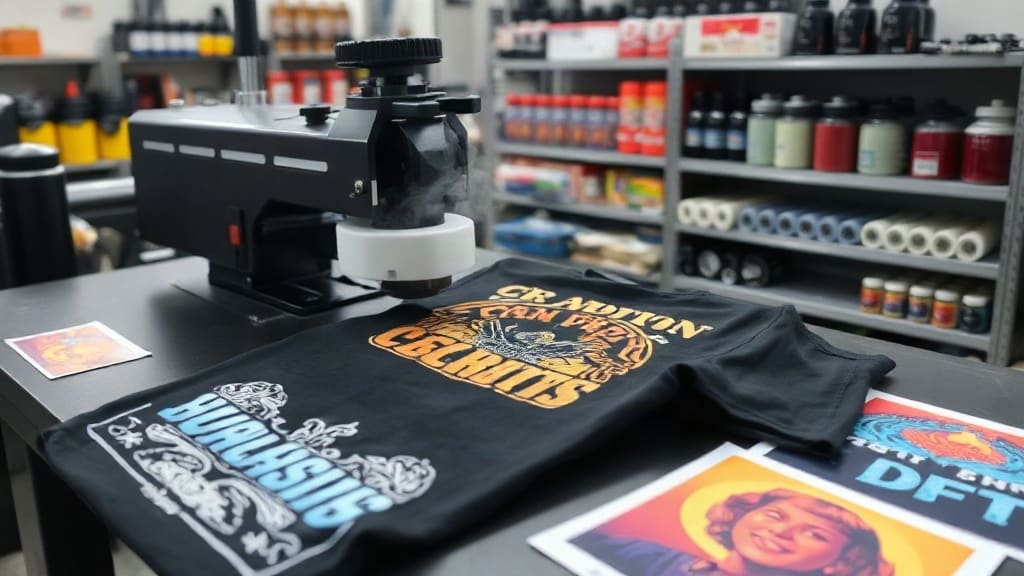
DTF transfers have revolutionized the custom printing industry, offering a versatile and cost-effective way to create vibrant designs on various fabrics. Whether you're a small business owner, a hobbyist, or just curious about the latest printing technology, this guide will walk you through everything you need to know about these amazing heat transfers. From understanding what they are to mastering the application process, you'll be equipped with the knowledge to make professional-quality prints right from your home or shop.
What Are DTF Transfers?
DTF stands for Direct to Film. It's a printing method where a design is printed onto a special PET film using a DTF printer. The printed film is then covered with adhesive powder, which is melted to create a tacky surface. When heat and pressure are applied, the design transfers from the film to the fabric. This process allows for vibrant, detailed, and durable prints on a wide range of materials, including cotton, polyester, blends, and even nylon.
Unlike traditional screen printing or heat transfer vinyl (HTV), DTF transfers don't require weeding or complicated setup. The entire design, including colors and details, is printed directly onto the film, making it ideal for full-color images, gradients, and intricate patterns. This simplicity is why many print shops are adopting DTF technology.
How DTF Transfers Work
The process of creating and applying DTF transfers involves several key steps. Understanding each stage ensures you get the best results.
Printing the Design
First, you need a DTF printer, which uses specialized CMYK+W (white) ink. The design is printed in reverse (mirrored) onto a PET film. The white ink serves as an underbase, ensuring colors pop on dark or colored fabrics. The printer lays down the white layer first, then the color layers on top.
Applying Adhesive Powder
After printing, while the ink is still wet, you sprinkle a hot-melt adhesive powder over the entire design. This powder is usually made of a thermoplastic polyurethane (TPU). Evenly coating the film is crucial. Then, you shake off the excess powder so only the printed areas retain it.
Melting the Powder
The film with the powder is then passed through a curing oven or heat press at a specific temperature (usually around 160-180°C or 320-356°F) for a short time. This melts the powder onto the ink, creating a strong bond. The result is a finished DTF transfer sheet ready for application.
Transferring to Fabric
To apply the transfer, place it on the garment with the printed side facing down. Use a heat press (or a home iron) with the recommended temperature and pressure for about 15-20 seconds. Then, peel the film off either hot or cold, depending on the adhesive type. Your design is now permanently embedded in the fabric.
Why Choose DTF Transfers?
There are several reasons why DTF transfers are becoming a favorite among printers and crafters.
- Versatility: They work on a vast range of fabrics, including cotton, polyester, blends, and even leather and nylon. This makes them superior to HTV, which often fails on synthetic materials.
- Durability: The prints are stretchable, washable, and crack-resistant. They can withstand repeated washing without fading or peeling, making them ideal for everyday apparel.
- Cost-Effective: No need for screens or weeding tools. You can create small batches or single items profitably, which is perfect for on-demand printing.
- High Detail: DTF printers can reproduce intricate designs, gradients, and photographic images with exceptional clarity. The white underbase ensures colors remain vibrant even on dark garments.
- Easy to Use: Once you have the equipment, the process is straightforward. You can store the transfers for later use, making it convenient for busy schedules.
DTF Transfers vs. Other Methods
To truly appreciate DTF transfers, it's helpful to compare them with other popular printing techniques.
DTF vs. Screen Printing
Screen printing requires creating a separate screen for each color, which is time-consuming and expensive for small runs. DTF allows you to print full-color designs in one pass, with no setup fees. For small to medium quantities, DTF is often more economical. However, for very large orders (hundreds of shirts), screen printing might still be cheaper per unit due to economies of scale.
DTF vs. Heat Transfer Vinyl (HTV)
HTV is great for simple designs with solid colors, but it requires weeding, which is tedious and limits complexity. DTF eliminates weeding and supports multi-color designs with ease. Moreover, DTF adheres better to synthetic fabrics, whereas HTV often peels off polyester.
DTF vs. Sublimation
Sublimation is limited to white or light-colored polyester fabrics. DTF works on a variety of materials and colors, including cotton. If you work with cotton shirts, DTF is a clear winner. Sublimation also requires special paper and a heat press, similar to DTF, but the fabric restriction is a significant drawback.
Step-by-Step Guide to Applying DTF Transfers
Here's a detailed guide to help you get perfect results every time.
What You'll Need
- A heat press (or a home iron with a Teflon sheet)
- DTF transfer sheet
- Garment (pre-pressed to remove wrinkles)
- Teflon sheet or parchment paper (for protection)
Application Steps
- Pre-heat your heat press to the recommended temperature (usually 160-170°C or 320-338°F). Set the timer for 15-20 seconds.
- Place your garment on the press bed and pre-press it for 2-3 seconds to remove moisture and wrinkles.
- Position the DTF transfer on the garment, with the printed side facing down (mirror image). Make sure it's centered and aligned.
- Cover with a Teflon sheet or parchment paper to protect the transfer and the press.
- Press with medium to firm pressure for the recommended time. Do not move the film during pressing.
- After the press beeps, remove the garment and let it cool for a few seconds if it's a cold-peel transfer. If it's hot-peel, peel the film immediately while still hot.
- Peel the film off gently, pulling it back over itself. Your design is now transferred.
- For added durability, you can press again for 5-10 seconds with a Teflon sheet on top, but it's not always necessary.
Tips for Perfect DTF Transfers
Here are some expert tips to ensure your DTF transfers come out flawless.
- Always use high-quality films and inks. Cheap materials can lead to poor adhesion and color bleeding.
- Keep your film clean – dust or oil can cause imperfections.
- Don't skip pre-pressing the garment; it removes moisture that can affect adhesion.
- Use a Teflon sheet to avoid direct contact between the heat plate and the transfer, which prevents sticking.
- Test on a scrap piece of fabric first to fine-tune your time and temperature settings.
- Store unused transfers in a cool, dry place, away from direct sunlight.
Common Mistakes to Avoid
Even experienced printers make errors. Here are some pitfalls and how to avoid them.
Too Low or Too High Temperature
If the temperature is too low, the adhesive won't melt properly, leading to peeling. If it's too high, you might scorch the fabric or the transfer. Always follow the manufacturer's recommendations and do test runs.
Insufficient Pressure
Without enough pressure, the transfer won't bond correctly. Make sure your heat press is adjusted to medium or firm pressure, especially for thicker fabrics.
Peeling Too Fast
If you peel too quickly, the design might pull away from the fabric. Always follow the recommended peeling method (hot or cold) and peel gently.
Using the Wrong Film
Not all films are created equal. Some are designed for specific inks or printers. Ensure you're using the right film for your DTF printer and ink type.
Applications of DTF Transfers
The versatility of DTF transfers makes them perfect for various products:
- Custom t-shirts and apparel
- Sportswear and jerseys
- Tote bags and backpacks
- Hats and caps
- Aprons and workwear
- Home textiles like pillow covers and curtains
- Pet clothing and accessories
- Promotional items
Frequently Asked Questions
Can I use DTF transfers on dark-colored garments?
Yes, absolutely. The white ink underbase in DTF transfers ensures that colors remain vibrant and opaque even on dark fabrics. This is a major advantage over other methods like sublimation, which only works on light materials.
How many washes can a DTF transfer withstand?
With proper application, DTF transfers are very durable and can withstand 40-50 washes or more without significant fading or cracking. To maximize longevity, wash garments inside out in cold water and avoid using bleach or fabric softeners.
Do I need a special printer to make DTF transfers?
Yes, you need a DTF printer, which is specifically designed to print on PET film using DTF inks. However, you can also purchase ready-made DTF transfers from suppliers if you don't want to invest in the equipment. This is a great option for small businesses or hobbyists.
Can I use a regular home iron to apply DTF transfers?
Yes, you can use a home iron, but it's more challenging to achieve consistent results. You'll need to set the iron to the highest setting (without steam) and apply firm pressure for a longer time, around 30-45 seconds. Using a Teflon sheet is essential to prevent damage. However, a heat press is recommended for best results.
What is the difference between DTF and DTG printing?
DTG (Direct to Garment) printing involves printing directly onto the fabric using a specialized inkjet printer. DTF, on the other hand, prints onto a film that is then heat-transferred to the fabric. DTF is more versatile because it can be used on a wider range of fabrics, including polyester, and allows for pre-printing and storage of transfers.
Conclusion
DTF transfers are a game-changer in the custom printing world. They offer an easy, cost-effective, and versatile solution for creating high-quality prints on a variety of fabrics. Whether you're just starting out or looking to expand your printing capabilities, DTF technology is worth considering. With the right equipment and a bit of practice, you can produce professional results that will impress your customers and stand the test of time. So, go ahead and dive into the world of DTF transfers – your creativity will thank you.